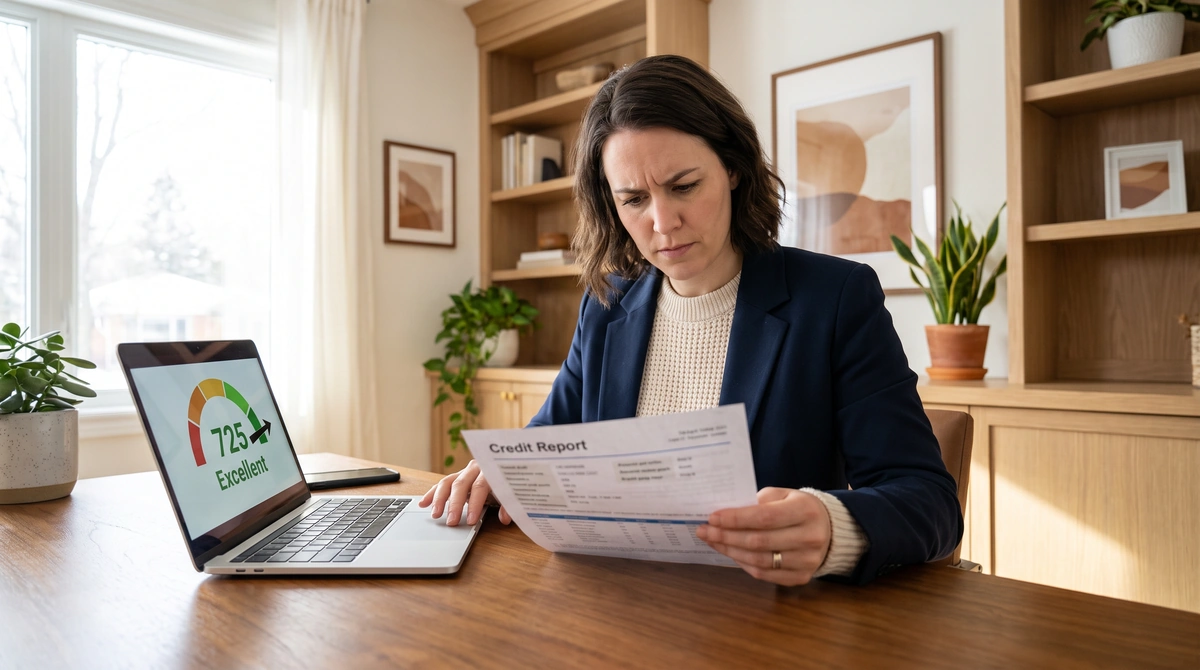
Yes — your personal credit and an SBA loan are closely linked, and the connection runs in both directions. The SBA loan personal credit impact shows up first when you apply (lenders pull your credit to size you up), and it can show up again after funding if payments go sideways.
Understanding both sides of that relationship helps you protect your score, prepare a stronger application, and avoid surprises down the road. Here is how the two connect, what lenders actually see, and what you can do before and after closing to keep your credit healthy.
Why Personal Credit Matters for an SBA Loan
Even though the loan is going to your business, SBA lenders treat your personal credit as a core signal of how you handle money. That is because any owner with 20% or more of the business must personally guarantee the loan — meaning your name and your score are tied to the debt from day one. Lenders view your credit history as part of the classic “5 C’s” of underwriting, specifically the character piece.
Your entity type does not change this. Whether you run an LLC, S-corp, C-corp, or sole proprietorship, the SBA still requires personal guarantees from majority owners. A strong personal credit profile signals lower risk, which usually translates into faster approvals, better rates, and larger loan amounts.
Key Fact
The SBA itself does not set a minimum personal credit score. Individual lenders set their own thresholds — most want to see a FICO of 640 to 680 or higher, but strong cash flow and collateral can offset a lower score.
How Lenders Actually Use Your Credit
Lenders look at more than the three-digit number on top of your credit report. They review the depth of your credit history, payment patterns, current utilization, recent inquiries, and any derogatory marks like collections, tax liens, or past bankruptcies. Two applicants with identical 680 FICOs can get very different decisions if one has a clean 15-year history and the other has recent late payments.
| Loan Type | Typical Minimum FICO | What Lenders Look For |
|---|---|---|
| SBA 7(a) | 640-680 | Clean 3-year history, low utilization, no recent collections |
| SBA 504 | 680+ | Strong history since real estate loans are long-term |
| SBA Express | 650-700 | Higher bar to offset the faster underwriting process |
| SBA Microloan | 575-640 | Most flexible — intermediary lenders set their own rules |
If your score sits below your lender’s threshold, all is not lost. Read our guide on getting an SBA loan with bad credit to see what strengths can compensate for a weaker score.
The Credit Inquiries That Come With Applying
Applying for an SBA loan puts your credit report in motion. Pre-qualification usually starts with a soft pull, which does not affect your score and is invisible to other lenders. Once you move into a formal application, the lender runs a hard pull for each 20%-or-more owner listed on the loan.
Watch Out
Each hard inquiry can dip your FICO score by 3 to 8 points and stays on your report for two years. Multiple business-loan pulls within a 14 to 45 day rate-shopping window are typically counted as a single inquiry — but do not drag out your comparison shopping.
If you have a co-owner, spouse-owner, or business partner also signing the guarantee, plan on their credit being pulled too. Coordinate the timing so you are not triggering inquiries every few weeks.

SBA Loan Personal Credit Impact: How the Loan Affects Your Score
Here is where borrowers often get surprised. Most SBA business term loans do not automatically show up on your personal credit report as long as you pay on time. The debt lives on the business’s books, and the lender reports the tradeline to business credit bureaus like Dun & Bradstreet, Experian Business, and Equifax Business — not to your personal FICO.
However, that only holds while the loan is current. The SBA personal guarantee you signed at closing means the lender has the right to pursue you personally if the business cannot pay — and once that happens, the impact on your personal credit can be severe. Here is how the three main payment scenarios play out:
On-Time Payments
Usually no direct effect on your personal credit score. Payments show up as a business tradeline and help build your business credit profile.
Late Payments (60+ Days)
Some lenders begin reporting to personal credit bureaus once payments are 60 to 90 days past due. Expect a 60 to 100 point score drop that can linger for seven years.
Default or Charge-Off
The full balance can be reported against you personally, and collection activity begins. This is the most damaging outcome — often 100+ points off your FICO.
SBA lines of credit and CAPLines behave a bit differently — since balances fluctuate, some lenders do report utilization, which can affect your credit-mix and utilization ratios. Ask your lender directly how they report before you close.
What Happens to Your Credit if You Default
Default is the worst-case scenario, but it is worth understanding because it is where the personal-guarantee mechanics really bite. Once the lender declares the loan in default — typically after 90 to 120 days of missed payments — they can accelerate the note, demand full repayment, and enforce the guarantee against you personally. That means the debt shifts from a business obligation into a personal one on the lender’s books.
From there, the charge-off gets reported to Equifax, Experian, and TransUnion under your Social Security Number. Your score can drop 100 points or more overnight, and the charge-off stays on your report for seven years from the date of first delinquency.
If the lender cannot collect, the SBA honors the guarantee to the bank and then transfers the debt to the Treasury Department. Treasury can garnish tax refunds, Social Security benefits, and federal wages through the Treasury Offset Program.
In extreme cases borrowers explore bankruptcy as a reset. If you are researching that path, review our guide on getting an SBA loan after a bankruptcy to understand the multi-year rebuild ahead of you.
Steps to Strengthen Your Personal Credit Before Applying
If you have any runway before applying, six to twelve months of intentional credit work can materially shift where you land in the lender’s decision matrix. Focus on the four moves that create the biggest lift for SBA underwriting:
Pull All Three Credit Reports
Get your Equifax, Experian, and TransUnion reports free at AnnualCreditReport.com. Lenders may check any or all three.
Dispute Errors and Pay Down Balances
Nearly one in five reports contains an error. Dispute anything inaccurate and drive revolving utilization below 30% — ideally under 10% — to boost your score fast.
Avoid New Credit Inquiries
Do not open new personal credit cards, auto loans, or mortgages in the six months before you apply. Fresh inquiries and new accounts both lower your score temporarily.
Understand the Minimum You Need
Different SBA programs have different bars. Review the minimum credit score for an SBA loan so you know exactly what to target.

Building Business Credit Alongside Personal Credit
A well-paid SBA loan is one of the fastest ways to build genuine business credit. Over time, a strong business credit profile means future lenders lean less on your personal FICO — and your personal credit is more insulated from business ups and downs. Focus on these core moves early in the life of your loan:
- Get an EIN and register a Dun & Bradstreet DUNS number for the business.
- Open business credit cards and vendor accounts under the business name.
- Pay every SBA installment on or before its due date.
- Ask your SBA lender whether they report to business credit bureaus.
Key Takeaway
The SBA loan personal credit impact is a two-way street. Your credit shapes the terms you get up front, and how you manage the loan shapes what your credit looks like on the back end. Treat both as connected assets from day one.
Bringing It All Together
Personal credit is one of the biggest levers in your SBA loan story — but it is not the only one. Lenders weigh cash flow, collateral, industry experience, and business plan quality alongside your score. If your credit is strong, protect it through the application process by clustering inquiries. If it is weaker, prepare for six to twelve months, pair it with a solid business case, and consider programs like Microloans that are more forgiving.
Above all, remember the SBA loan personal credit impact runs in both directions. What you do before the loan closes shapes your approval — and what happens after closing shapes your personal financial future for years to come.
Ready to See Where Your Credit Stands With an SBA Lender?
Get a real-world read on your SBA loan options — including whether your current credit profile qualifies you for the best rates and terms. Our team walks you through it, one score at a time.