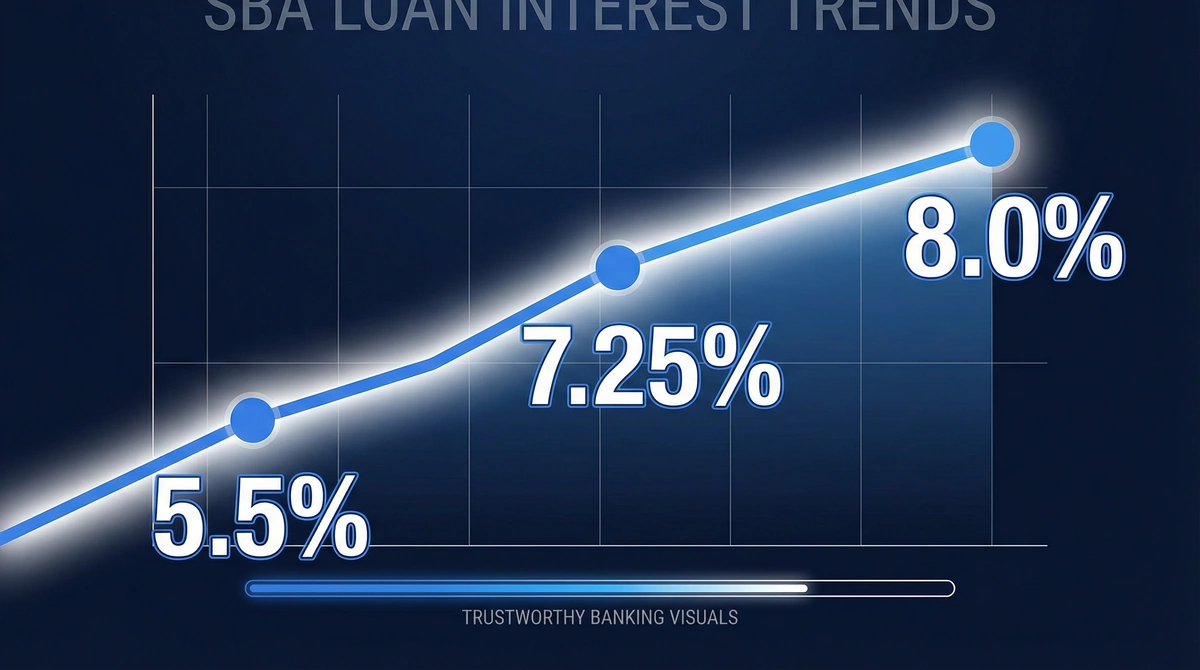
“What’s the interest rate?” It’s one of the first questions every borrower asks — and with SBA loans, the answer isn’t a single number. SBA loan interest rates are calculated using a formula tied to the Prime Rate, and your specific rate depends on the loan program, the amount you borrow, and your financial profile.
Understanding how SBA rates work gives you the power to compare lenders, negotiate better terms, and avoid overpaying. Here’s exactly how it breaks down.
How SBA Loan Interest Rates Are Calculated
SBA loan rates follow a simple formula:
Your Rate = Prime Rate + Lender’s Spread
The Prime Rate is a benchmark interest rate that moves with the Federal Reserve’s decisions. As of early 2026, the Prime Rate sits at approximately 7.5%. When the Fed raises or lowers rates, Prime moves with it — and so does your SBA loan rate (for variable-rate loans).
The spread (or markup) is what your lender adds on top of Prime. The SBA sets maximum allowable spreads for each program, but lenders can charge less. This is why shopping multiple lenders matters — the spread is where you have negotiating room.
Current SBA Loan Rates by Program
Here’s what you can expect to pay across the major SBA loan programs:
| Program | Rate Type | Typical Spread | Approximate Rate |
|---|---|---|---|
| SBA 7(a) | Variable | Prime + 1.5% to 3.0% | 9.0% – 10.5% |
| SBA Express | Variable | Prime + 4.5% to 6.5% | 12.0% – 14.0% |
| SBA 504 (CDC portion) | Fixed | Below-market fixed | 5.5% – 6.5% |
| SBA Microloans | Fixed | Set by intermediary | 8% – 13% |
Note: Rates reflect approximate ranges based on early 2026 Prime Rate. Your actual rate will depend on your lender, loan size, and financial profile. Verify current rates with your lender.
Wondering about the total cost of your loan beyond the interest rate? Our guide on SBA loan closing costs covers the fees most borrowers don’t see coming.
SBA Maximum Spread Limits
The SBA caps how much lenders can charge above Prime. These limits protect borrowers from excessive rates:
| Loan Amount | Maturity ≥ 7 Years | Maturity < 7 Years |
|---|---|---|
| $50,000 or less | Prime + 6.5% | Prime + 5.5% |
| $50,001 – $250,000 | Prime + 6.0% | Prime + 5.0% |
| Over $250,000 | Prime + 3.0% | Prime + 2.0% |
These are maximums — competitive lenders will often offer lower spreads, especially for strong borrowers with larger loans. This is exactly why comparing multiple lenders is critical.
Fixed vs Variable Rate SBA Loans
Understanding the difference between fixed and variable rates can save you money over the life of your loan:
Variable rate (most 7(a) and Express loans): Your rate adjusts as the Prime Rate changes — typically quarterly. If rates drop, your payments decrease. If rates rise, your payments increase. Variable rates usually start lower than fixed rates.
Fixed rate (504 loans, some 7(a) loans): Your rate stays the same for the entire loan term. Payments are predictable and won’t increase if rates rise. Fixed rates typically start slightly higher than variable rates.
If you’re buying commercial real estate, the SBA 504 program’s fixed-rate CDC portion can be especially attractive. See how the numbers play out over time in our guide to SBA loan amortization schedules.
What Determines Your Specific Rate
Two borrowers applying for the same SBA loan can get different rates. Here’s what lenders evaluate:
- •Personal credit score — Higher scores generally mean lower spreads
- •Business cash flow — Strong revenue and a healthy Debt Service Coverage Ratio (DSCR) of 1.25x+ demonstrate repayment ability
- •Loan amount — Larger loans qualify for lower maximum spreads
- •Loan term — Shorter terms get lower maximum spreads
- •Collateral — Offering solid collateral can help you negotiate a better rate
- •Industry — Some industries are considered higher risk by lenders
- •The lender itself — Each lender has its own pricing policies within SBA limits
Concerned about whether your rate will include a prepayment penalty? That’s a separate cost worth understanding before you sign.

How to Get the Best SBA Loan Rate
You can’t control the Prime Rate, but you can influence the spread you’re offered. Here’s how to position yourself for the best SBA loan interest rates:
- •Improve your credit score before applying — even a small increase can help
- •Show strong business cash flow with organized financial statements
- •Compare at least 3 lenders — spreads vary significantly between institutions
- •Consider a shorter term if your cash flow supports higher payments — you’ll qualify for a lower spread
- •Work with an SBA specialist who can match you with competitive lenders for your specific situation
The right SBA loan interest rates can save you thousands over the life of your loan. Taking time to understand the formula and shop your options is one of the smartest moves you can make as a borrower.
Find Your Best SBA Loan Rate
Every borrower’s rate is different. Our SBA loan experts can help you understand your options and connect you with competitive lenders for your situation.