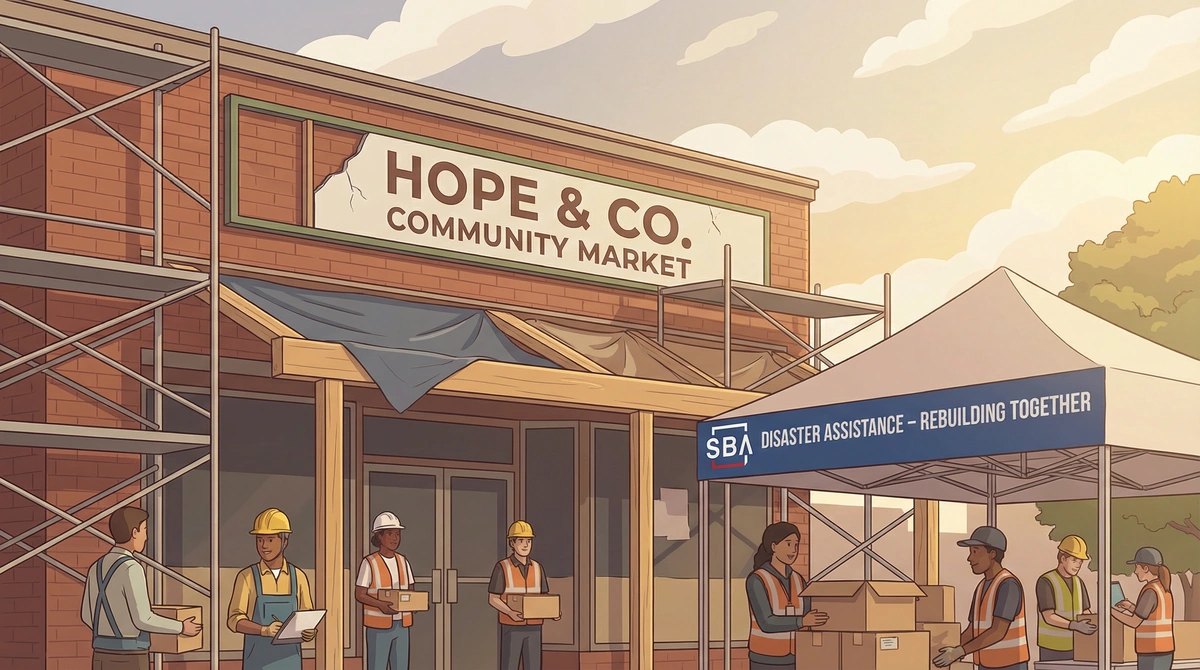
A hurricane tears through your town overnight. Your storefront is flooded, inventory is destroyed, and customers won’t be walking through that door for weeks — this is exactly the scenario SBA disaster loans were designed for.
Unlike standard SBA programs that work through banks, disaster loans come directly from the Small Business Administration — offering low interest rates, long repayment terms, and a lifeline when your business needs it most. Here’s everything you need to know about qualifying, applying, and getting funded.
What Are SBA Disaster Loans?
SBA disaster loans are low-interest federal loans available to businesses, homeowners, renters, and nonprofits located in areas hit by a presidentially declared or SBA-declared disaster. They’re one of the few SBA programs where the agency itself acts as the lender — you borrow directly from the SBA, not from a bank or credit union.
These loans help cover the costs of repairing physical damage, replacing lost inventory, or keeping your business running while revenue is disrupted. They’re available regardless of your business size, and the application process is more streamlined than traditional SBA loan programs.
Key Difference
Unlike SBA 7(a) and 504 loans — which are made by banks and partially guaranteed by the SBA — disaster loans are funded directly by the SBA. This means faster access to capital when you need it most, with no intermediary lender involved.
Three Types of Disaster Loans
The SBA offers three distinct disaster loan programs, each targeting a different type of loss. Understanding which one applies to your situation is the first step toward recovery.
| Loan Type | Purpose | Max Amount | Key Requirement |
|---|---|---|---|
| Physical Disaster Loan | Repair or replace damaged real estate, equipment, inventory, and fixtures | $2,000,000 | Documented physical damage from the declared disaster |
| Economic Injury Disaster Loan (EIDL) | Cover operating expenses when disaster disrupts normal revenue — even without physical damage | $2,000,000 | Proven economic harm from the disaster |
| Military Reservist EIDL (MREIDL) | Support businesses that lose an essential employee called to active military duty | $2,000,000 | Essential employee activated for military service |
The critical distinction: Physical Disaster Loans address property damage, EIDLs address revenue loss, and MREIDLs address the loss of a key team member. Many businesses affected by a disaster qualify for both a physical loan and an EIDL — though the combined amount cannot exceed $2,000,000. For the latest program details, visit the SBA’s disaster assistance page.

Who Qualifies for These Loans?
Eligibility for disaster loans is broader than most business owners expect. Here’s what you need to know:
- ●Location: Your business must be in an area covered by an SBA or presidential disaster declaration
- ●Business size: Unlike standard SBA loans, there is no SBA size standard requirement — businesses of all sizes can apply
- ●Other financing: You don’t need to prove you’ve been denied credit elsewhere (a requirement for standard SBA programs)
- ●Credit: The SBA evaluates creditworthiness, but the bar is lower than conventional lending — the agency considers your overall financial picture
- ●Not just businesses: Homeowners, renters, and nonprofits can also qualify for physical disaster loans
Important Deadline
You must apply within the deadline stated in the disaster declaration. These deadlines are strict — typically 60 days for physical damage loans and 9 months for economic injury loans. Missing the window means losing access to the program entirely.
Interest Rates and Terms
One of the biggest advantages of SBA disaster loans is the interest rate. Unlike standard SBA loans where rates are tied to the Prime Rate plus a spread, disaster loan rates are set by a statutory formula and are among the lowest available anywhere. For a deeper look at how standard SBA rates work, see our guide on SBA loan interest rates.
| Borrower Type | Can Get Credit Elsewhere | Cannot Get Credit Elsewhere |
|---|---|---|
| Businesses | Not to exceed 8% | Not to exceed 4% |
| Homeowners / Renters | Not to exceed 8% | As low as 1.813%–3.625% |
| Nonprofits | Not to exceed 8% | Not to exceed 4% |
Key Takeaway
SBA disaster loan rates are often under 4% for businesses that can’t obtain credit elsewhere. Repayment terms extend up to 30 years based on your ability to repay, and there are no prepayment penalties — you can pay off the loan early without extra fees.
What These Loans Can Cover
The scope of what disaster loans can fund is surprisingly broad. Physical Disaster Loans cover the repair or replacement of real estate, machinery, equipment, inventory, furniture, and fixtures damaged by the disaster. This means everything from rebuilding a damaged storefront wall to replacing a walk-in cooler that was destroyed by flooding.
Economic Injury Disaster Loans cover the working capital your business needs to survive while recovering. That includes payroll, rent, utilities, accounts payable, and ongoing debt payments that your disrupted cash flow can no longer support. If your restaurant lost three weeks of revenue because the roads were impassable, EIDL funds can bridge that gap.
There’s also a provision many borrowers overlook: mitigation funds. The SBA can provide up to 20% in additional loan funds for improvements that protect your property against future disasters — things like storm shutters, retaining walls, or elevated electrical systems. This is essentially free investment in your business’s resilience.
What disaster loans don’t cover: lost profits or revenue beyond operating expenses, business expansion, refinancing pre-existing debt unrelated to the disaster, or upgrades that go beyond restoring the property to its pre-disaster condition (outside the 20% mitigation allowance).
How to Apply for an SBA Disaster Loan
The application process is more straightforward than standard SBA lending. Here are the steps:
Verify the Disaster Declaration
Check the SBA website to confirm your area is covered by an active disaster declaration and note the application deadlines.
Apply Online
Submit your application through the SBA disaster loan portal. You can also apply in person at an SBA disaster recovery center if one has been set up in your area.
Gather Your Documentation
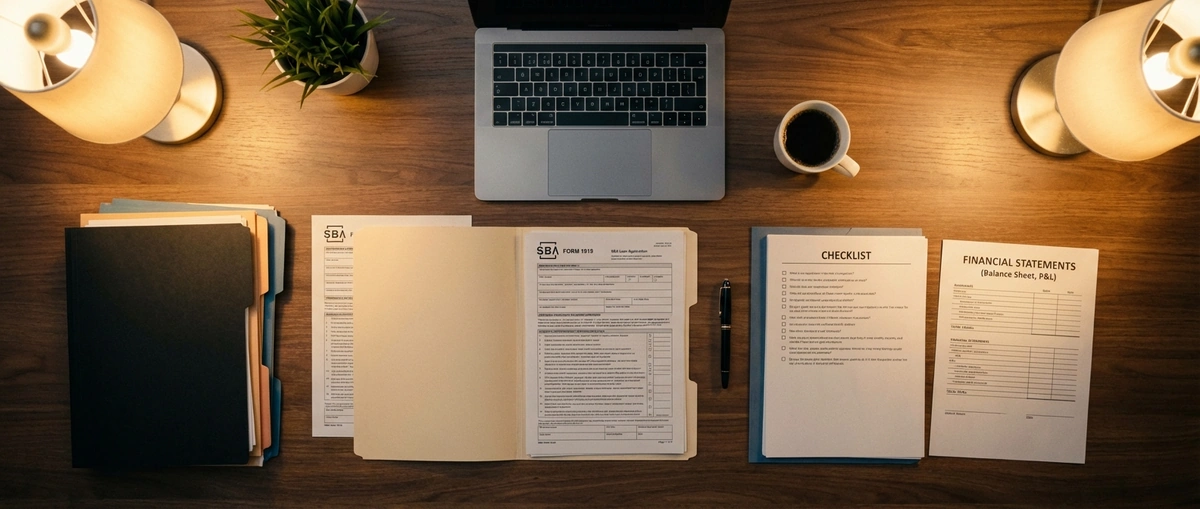
You’ll need three years of personal and business tax returns, a current financial statement, and proof of the disaster’s impact (photos of damage, insurance claims, revenue records). For a full checklist, see our SBA loan documentation guide.
SBA Inspection
For physical damage loans, the SBA sends a loss verifier to assess the damage in person. This typically happens within 7-10 days of your application.
Review and Approval
The SBA reviews your application, verifies your financial information, and makes a loan determination. Processing typically takes 2-3 weeks, though major disasters may extend timelines.
Receive Your Loan Offer
If approved, you’ll receive a loan offer with terms. You can accept, decline, or request reconsideration if the amount is less than expected. The first $25,000 can be disbursed without collateral requirements.
Timeline: What to Expect
After filing, the SBA typically completes its inspection within 7-10 days. Processing takes an average of 2-3 weeks, though this can stretch longer during major disaster events when application volume surges. Once approved, the initial disbursement — up to $25,000 — can arrive quickly. Remaining funds are released as you document repairs or expenses.
During major disaster events, the SBA often streamlines processing, increases staffing, and opens local disaster recovery centers to handle the surge in applications more efficiently.
Common Mistakes That Delay Your Application
Even with a streamlined process, certain mistakes can slow your application or lead to a lower loan amount than you need:
- 1.Waiting too long to apply — Filing deadlines are firm and non-negotiable. Don’t wait for insurance to settle before starting your SBA application.
- 2.Incomplete documentation — Missing tax returns or financial statements are the top reason applications stall in processing.
- 3.Not coordinating with insurance — The SBA requires you to report insurance proceeds. Failure to separate what insurance covers from what you’re requesting creates delays.
- 4.Underestimating the damage — Lowballing your losses in the application means a smaller loan offer. Document everything thoroughly.
- 5.Skipping the mitigation funds — Many borrowers don’t know about the 20% additional allowance for protective improvements. This is essentially free funding for future resilience.
Most Common Application Stall
Missing tax returns are the number one reason disaster loan applications get delayed. Have three years of personal and business tax returns ready before you start the application.
Disaster Loans vs Other SBA Programs
If you’re already familiar with SBA lending, here’s how disaster loans stack up against the standard programs. For a closer look at the most common SBA loan, see our SBA 7(a) vs Express comparison.
| Feature | SBA Disaster Loans | SBA 7(a) | SBA 504 |
|---|---|---|---|
| Lender | SBA directly | Banks (SBA guarantees) | Banks + CDCs (SBA guarantees) |
| Max Amount | $2,000,000 | $5,000,000 | $5,500,000 |
| Interest Rate | Set by SBA (often under 4%) | Prime + 1.5%–3% | Below-market fixed (CDC portion) |
| Guarantee Fee | None | 0%–3.75% | Varies |
| Credit Flexibility | More flexible | Typically 640+ FICO | Typically 680+ FICO |
| Use Case | Disaster recovery only | General business purposes | Real estate and equipment |
If your financing needs go beyond disaster recovery — expansion, acquisition, or working capital unrelated to a disaster — standard SBA loan programs will be a better fit.
Take the First Step Toward Recovery
SBA disaster loans offer something rare in the lending world: direct federal funding with low rates, long terms, flexible credit requirements, and no guarantee fee. Whether you’re dealing with physical damage, economic disruption, or the loss of an essential employee to military service, there’s a program designed to help you recover.
The most important thing is to act quickly. Deadlines are firm, documentation takes time to gather, and the sooner you apply, the sooner funds can start flowing. Disasters are unpredictable, but your recovery plan doesn’t have to be.
Need Financing Beyond Disaster Recovery?
Whether you’re recovering from a disaster or looking to grow your business with SBA financing, our team can help you find the right loan program for your situation.