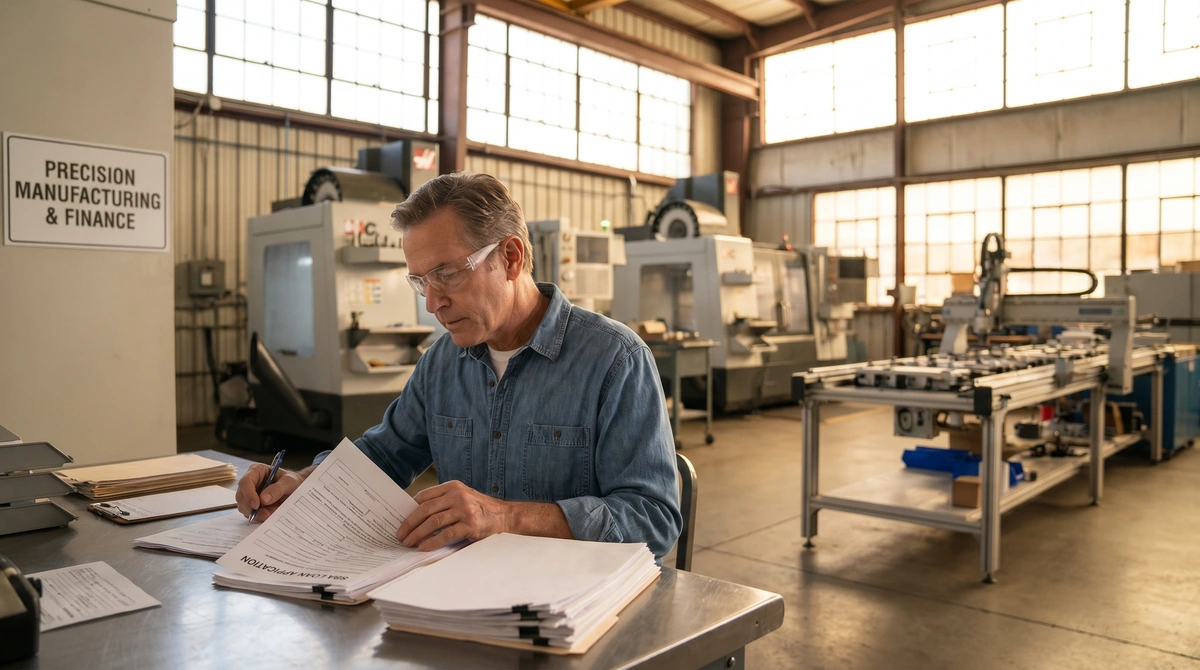
You’ve maxed out your current equipment capacity. Orders are stacking up, but your production line can’t keep pace. A new CNC machining center or an expanded facility could double your output — but the price tag runs $600,000 or more. That’s the moment many manufacturing business owners start seriously asking: can I get an SBA loan for manufacturing?
The answer is yes — and manufacturing businesses are actually well-positioned for SBA financing. Between the SBA 504 and 7(a) programs, there’s a structure that fits almost every growth scenario, from buying heavy equipment to purchasing your own facility. This guide breaks down which program works for your specific need and what it takes to qualify.
Why Manufacturing Businesses Turn to SBA Loans
Manufacturing is inherently capital-intensive. Industrial equipment, production facilities, tooling upgrades, and automation systems all require significant upfront investment. Conventional lenders often respond to these requests with stiff down payment requirements — 20-30% on equipment, more on commercial real estate — and shorter repayment terms that can strain cash flow.
SBA programs address that gap directly. Down payments as low as 10% and repayment terms up to 20 years (for real estate and long-life equipment under the 504 program) make it manageable to finance growth without draining the working capital you need to run daily operations.
Manufacturing businesses classified under NAICS codes 31-33 are eligible for SBA loans. Size standards for this sector are employee-based and vary by sub-industry — some sub-sectors cap at 500 employees, others up to 1,500. Most growing manufacturers fall well within these limits.
Key Fact: Manufacturing Size Standards
SBA size standards for manufacturing (NAICS 31-33) are based on number of employees, not revenue. Most sub-sectors have a cap of 500-1,500 employees — far above the typical growth-stage manufacturer. Verify your exact code at SBA.gov’s Size Standards Table.
SBA 504 vs 7(a): Match the Program to Your Need
Choosing the right program depends on what you’re financing. The SBA 504 loan is built for long-life, fixed assets — think production facilities and major equipment. The SBA 7(a) loan offers more flexibility, covering everything from equipment to working capital to mixed-use projects.
| Use Case | Best Program | Max Amount | Down Payment | Term |
|---|---|---|---|---|
| Purchase manufacturing facility | SBA 504 | Up to $16.5M (manufacturing) | 10% | 20 years |
| Major equipment (CNC, robotics, presses) | SBA 504 or 7(a) | $5M–$5.5M | 10% | 10 years |
| Working capital for large contract | SBA 7(a) | $5M | 10–20% | 10 years |
| Mixed use (equipment + working capital) | SBA 7(a) | $5M | 10–20% | 10 years |
| Facility expansion / leasehold improvements | SBA 504 or 7(a) | $5M–$5.5M | 10% | 10–20 years |
The 504 program has a notable advantage for manufacturers: its loan cap increases to $16.5 million for projects that meet SBA’s manufacturing or energy-efficiency criteria. If you’re acquiring a large facility or multiple pieces of capital equipment, that higher ceiling can matter.
The 504 structure splits the loan three ways: a bank covers 50%, a Certified Development Company (CDC) covers 40% at a fixed, below-market rate, and you put in 10%. This fixed CDC rate protects you from interest rate volatility over a 10- or 20-year term — a real advantage when you’re locking in major infrastructure costs.
What You Can Finance With an SBA Loan for Manufacturing
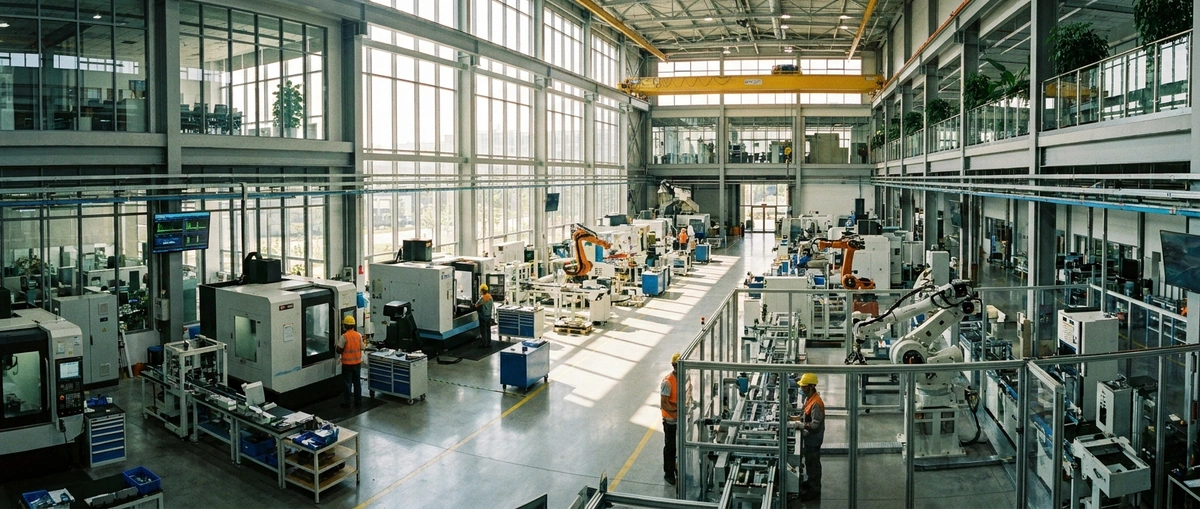
SBA financing covers a wide range of manufacturing growth needs. Common eligible uses include:
-
•
Production equipment — CNC machining centers, injection molders, conveyor systems, laser cutters, and automation or robotics upgrades -
•
Facility purchase — Buy the building you currently lease, or acquire a new production facility (see our guide on SBA real estate loans) -
•
Leasehold improvements — Upgrading power capacity, HVAC, loading docks, or production layout in a leased facility -
•
Working capital for growth — Funding inventory, raw materials, or labor costs tied to a major new contract (see how working capital loans work) -
•
Export expansion — If you sell or plan to sell to international buyers, the SBA International Trade Loan can support export-related equipment, facilities, or working capital
One thing SBA financing cannot fund: speculative real estate, investments, or paying off most unsecured personal debt. Keep the use of proceeds tied directly to business operations.
Qualifying as a Manufacturing Business
Meeting basic SBA eligibility is the starting point. Here’s what lenders look for when reviewing a manufacturing loan application:
SBA Size Standards
Your business must qualify as small under SBA definitions for NAICS 31-33. Most manufacturing sub-sectors use employee-based caps (500-1,500 employees), not revenue.
Time in Business
Lenders prefer 2+ years of operating history with documented revenue. Startups can qualify but typically need stronger collateral or a detailed business plan.
Credit and Cash Flow
A personal FICO score of 640+ is typical, but lenders weigh business cash flow heavily. A Debt Service Coverage Ratio (DSCR) of 1.25x or higher shows the business can cover loan payments from operating income.
Collateral
For equipment or facility loans, the financed asset itself typically serves as collateral. The SBA won’t deny a loan solely for lack of additional collateral — but lenders will collateralize to the extent possible.
Common Mistake: Picking the Wrong Program
Using a 7(a) loan for a large equipment purchase when a 504 would qualify could mean a variable rate instead of a fixed one — costing tens of thousands in interest over a 10-year term. Talk to an SBA lender experienced in manufacturing before committing to a program.
Next Steps for Manufacturing Borrowers
Ready to move forward? Here’s how to get the process started on the right foot:
Find an SBA-Preferred Lender or CDC
Work with a lender experienced in manufacturing deals. For 504 loans, you’ll also need a Certified Development Company (CDC) for the 40% portion.
Gather Your Financials
Prepare 2-3 years of business tax returns, profit and loss statements, balance sheets, and accounts receivable/payable aging reports.
Define the Project
Identify the specific asset or project — equipment quotes, property appraisals, or facility plans. The more defined your project, the smoother the underwriting process.
Get Pre-Qualified First
Request a pre-qualification before committing to an equipment vendor or purchase timeline. Knowing your approval range lets you negotiate from a position of strength.
Fund Your Manufacturing Growth With the Right SBA Program
Manufacturing businesses have real advantages when it comes to SBA financing. The capital-intensive nature of the industry — equipment, facilities, automation — aligns well with what SBA programs are designed to fund. The 504 loan is the best fit for large fixed assets and real estate, while the 7(a) handles flexibility and working capital needs. Either way, an SBA loan for manufacturing can give your business the production capacity it needs to grow without sacrificing cash flow.
The right financing can transform your operations — and FinTech SBA can help you find it. Reach out to our team through our contact page if you have questions about which program fits your project.
Ready to Finance Your Next Production Milestone?
Whether you need equipment, a new facility, or working capital to fulfill a major contract, our SBA loan specialists can match you with the right program and walk you through every step.